
Artificial intelligence is driving unprecedented demand for compute while reshaping how data centers consume and manage power, creating electrical challenges the industry is still working to fully understand. Across the United States and globally, hyperscale facilities are expanding at a pace that few utilities anticipated. GPU clusters are growing denser, training workloads are becoming larger and more synchronized, and power densities per rack are climbing to levels that would have been considered extreme only a few years ago. Entire campuses are being designed around AI from the ground up, with unprecedented concentrations of compute operating in parallel.
Yet the most significant constraint on AI growth may not be compute capacity, cooling technology, or capital investment, it is power stability. AI data centers are introducing a new kind of electrical behavior into a grid system that was built for predictability. Instead of gradual demand curves, utilities and facility operators are now confronting rapid, synchronized load swings that stress transformers, protection systems, and grid frequency. In many regions, power delivery infrastructure is struggling to keep pace with the intensity and volatility of AI workloads. The question is no longer whether AI can scale, it is whether the electrical ecosystem supporting it can scale just as reliably.
Traditional data centers were designed around relatively smooth load profiles. CPU-driven workloads scaled incrementally, and electrical systems were engineered to accommodate steady fluctuations in demand over time. Even as facilities grew larger, their consumption patterns remained manageable and predictable from a grid perspective, but AI workloads behave differently.
Large training jobs often execute in tightly coordinated phases across thousands of GPUs. When those phases transition, power draw can shift abruptly across an entire facility. The resulting demand profile is not gradual. It oscillates, sometimes dramatically, within seconds. In major AI deployments, power swings of tens of megawatts per second have been observed, representing substantial electrical transitions occurring in extremely short time frames.
At the same time, the cadence of AI hardware advancement continues to accelerate. New platforms emerge every two to three years, each generation increasing rack-level power density and total facility demand. By contrast, grid infrastructure upgrades typically operate on five to ten year timelines. Substation expansions, transmission planning, and interconnection approvals simply cannot move at the same speed as semiconductor innovation. This growing gap between compute acceleration and grid modernization is becoming one of the defining challenges of the AI era.
The consequences of AI-driven load volatility extend beyond the data center perimeter. Rapid shifts in demand increase thermal cycling in transformers and switchgear, accelerating wear and reducing asset life. Protective systems must respond to more aggressive variations in current and voltage, and grid operators must maintain frequency stability in the face of increasingly dynamic loads. What may appear as internal facility behavior can quickly propagate upstream, affecting broader grid performance.
In regions where data centers are concentrated, the impact becomes even more pronounced. A relatively small number of states account for a majority of national data center load, and in some markets facilities already consume a substantial share of available utility capacity. Under these conditions, volatility compounds quickly, magnifying the stress on already constrained infrastructure.
Utilities are responding cautiously. Interconnection timelines are extending, capacity approvals are tightening, and in certain markets new large-load projects are being paused while infrastructure catches up. For AI developers and data center operators, this introduces a new strategic reality in which power availability and power stability are primary gating factors for growth. It is not simply about how much energy a facility consumes, rather how it consumes and how that consumption interacts with the grid.
Historically, data center power strategies focused on protecting uptime during outages. Uninterruptible Power Supplies bridged short interruptions, and generators provided backup during prolonged failures. The objective was straightforward: remain operational when the grid goes down.
AI-driven load volatility presents a different kind of challenge. The grid may be functioning normally, yet the facility’s demand behavior creates stress and instability that traditional backup systems were never designed to manage. UPS systems are typically not engineered to absorb rapid, repeated high-power transitions as part of continuous operation, and generators are not intended to serve as dynamic load-balancing tools. They respond to failures, not to volatility.
As AI workloads intensify, reliability must be redefined. It is no longer enough to protect against rare outage events. Facilities must actively manage how they interact with the grid every second of normal operation, ensuring that internal load behavior does not become a source of instability.
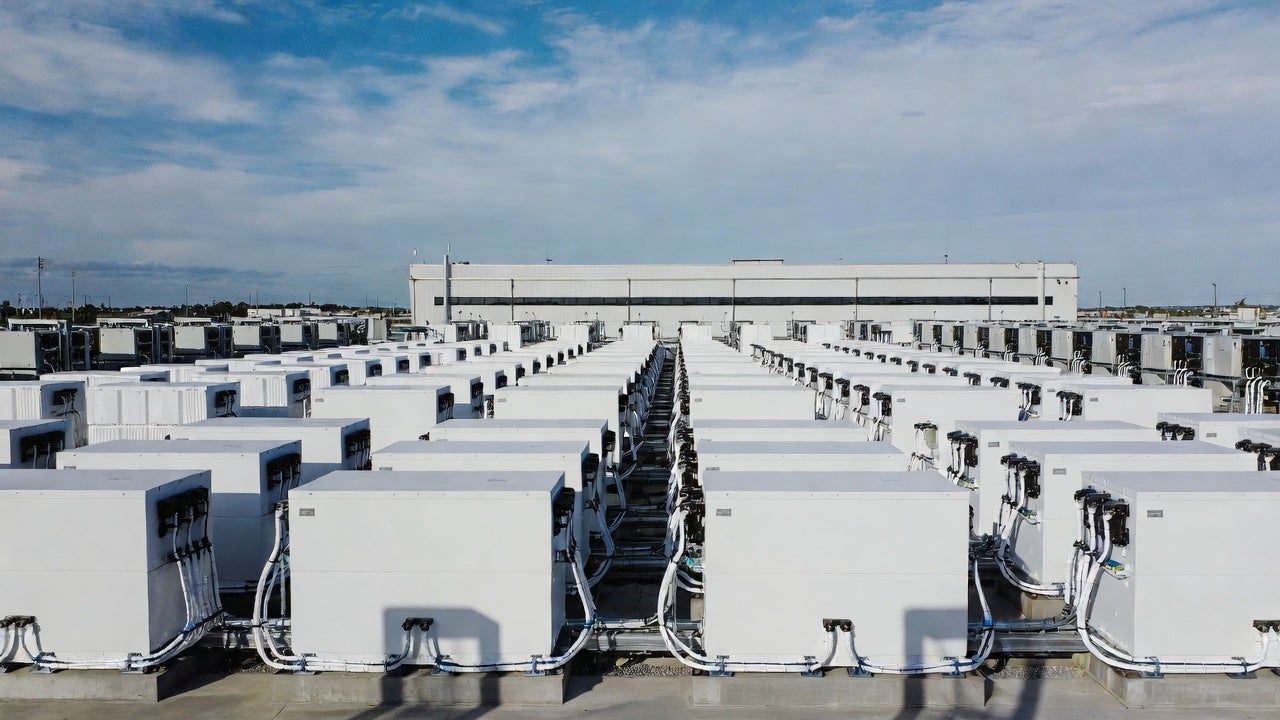
This is where Energy Storage Systems begin to shift from optional infrastructure to strategic necessity. Modern ESS platforms can operate continuously, charging and discharging in response to real-time demand conditions. Instead of reacting to faults, they shape load behavior proactively. When properly engineered and integrated, storage systems function as a buffer between volatile AI workloads and comparatively rigid grid infrastructure.
By absorbing rapid spikes during synchronized compute phases, ESS can smooth oscillating demand before it propagates upstream. This reduces stress on transformers and switchgear, improves power quality within the facility, and helps maintain grid stability in regions with concentrated data center growth. In grid-constrained markets, this capability can unlock incremental expansion where traditional infrastructure alone would struggle to support additional load. Rather than serving solely as backup power, energy storage becomes active infrastructure that enables AI facilities to scale with greater predictability and resilience.
Not all storage systems are equally suited for this role, and this distinction matters significantly in high-density AI environments. Many legacy ESS designs were optimized for long-duration discharge in utility applications, where sustained output over several hours was the primary requirement. AI data centers often require a different performance profile, one defined by fast response, high power output, and frequent partial cycling. Systems must be capable of reacting within seconds to synchronized compute transitions while maintaining thermal stability and long-term durability.
At the center of this capability is the battery system architecture itself, from cells and modules to racks and enclosures. This portion of the system represents the majority of cost and performance potential, and design decisions at the cell chemistry, pack architecture, and thermal management levels determine how effectively a system can respond to rapid load changes over years of operation.
Designing for AI environments requires a holistic approach that integrates battery engineering, enclosure design, thermal management, controls, and energy management software. Systems must be modular enough to scale alongside compute growth, robust enough to handle repeated high-power transitions, and safe enough to operate within densely packed facilities.
At Re:Build Battery Solutions, this integrated approach defines how we engineer Energy Storage Systems for demanding, high-density infrastructure environments. Our expertise spans the design and manufacturing of advanced battery packs, purpose-built enclosures, high-performance thermal management systems, and integrated Energy Management Systems that work together as a cohesive ESS platform. By controlling the architecture at the pack and system level, we develop solutions engineered specifically for demanding, high-density environments where fast response and long-term reliability are critical.
The rise of AI is not slowing down, and neither is the demand for advanced data center infrastructure. While grid constraints and load volatility present real challenges, they are not insurmountable. They represent a shift in how power must be managed, not a barrier to progress.
Energy Storage Systems offer a practical and scalable pathway forward. By reshaping how facilities draw power rather than simply increasing how much they consume, ESS provides operators with a degree of control that traditional infrastructure alone cannot offer. When designed and manufactured with performance, safety, and integration in mind, storage transforms power from a limiting factor into an enabler of growth.
The hidden power problem in AI data centers is real, but it is also solvable. Organizations that recognize this shift and invest in intelligent, engineered power architecture will not only scale faster, they will scale more reliably and with greater confidence.
In the AI era, power stability does not have to be a bottleneck. With the right Energy Storage System strategy and the right engineering partner, it can become a competitive advantage.
Fill out the form below and someone from the Re:Build Battery Solutions team will be in touch with you shortly.
Looking to connect with an experienced team?
Look no further than Re:Build Battery Solutions! We are excited to connect with you.
