
When the One Big Beautiful Bill Act (OBBBA) was signed into law on July 4, 2025, most headlines focused on its sweeping changes to defense spending, border security, and the rollback of solar and wind incentives. Yet tucked within its hundreds of pages is a development that could reshape the future of the battery industry. For the first time, batteries were recognized as a distinct and strategic energy asset, not just a clean energy enabler. This change has positioned advanced battery manufacturing at the very heart of U.S. industrial and energy policy.
For companies like Re:Build Battery Solutions and our customers, the message is clear: the federal government sees batteries as essential infrastructure, and it is backing that view with significant tax incentives, sourcing requirements, and even defense funding.
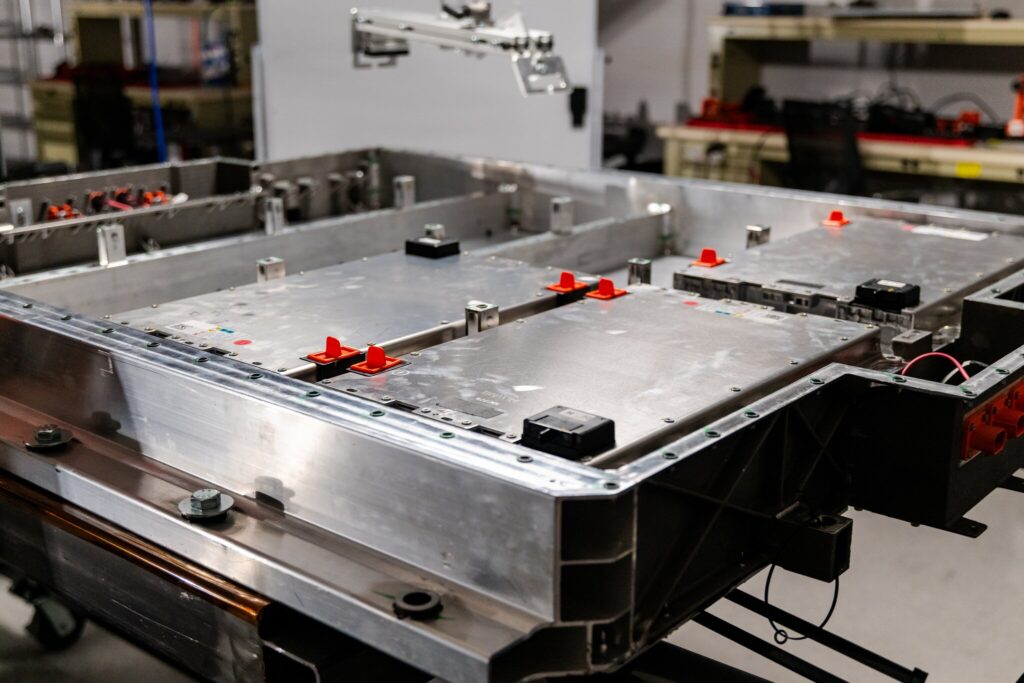
At the center of the bill is the 45X Advanced Manufacturing Production Credit, arguably the most impactful provision for battery manufacturers. This credit directly rewards U.S.-based production of battery cells, modules, and electrode materials. A company producing cells, for example, can now claim $35 per kilowatt-hour of output, while modules and active materials also qualify for substantial support.
The structure of the credit encourages companies to integrate vertically across the supply chain. By producing multiple components in-house, manufacturers can stack benefits and significantly improve margins. But there is urgency: the credit begins to phase down in 2030 and disappears entirely after 2032. Those who act quickly will be best positioned to capture the full value before the window closes.
Other provisions extend this support further upstream and downstream. A new 10 percent Critical Minerals Credit incentivizes domestic refining, processing, and recycling of key inputs like lithium, nickel, and graphite. The 48E Clean Electricity Investment Credit, meanwhile, expands opportunities for battery energy storage systems, covering up to 30 percent of capital costs for grid, microgrid, or standalone storage projects. Together, these credits form one of the most powerful incentive environments the U.S. battery industry has ever seen.
These opportunities do not come without strings attached. The OBBBA introduces strict Prohibited Foreign Entity (PFE) rules, which disqualify companies with significant ownership, debt, or licensing ties to countries like China, Russia, North Korea, and Iran. It also establishes a new metric, the Material Assistance Cost Ratio (MACR), requiring companies to prove that a growing percentage of their input costs are sourced from non-PFE entities. By 2030, that threshold rises to 85 percent for cells, modules, and electrode materials.
For many battery makers, especially those reliant on graphite or other materials where China dominates supply, compliance will be challenging. Building new sourcing strategies, documenting costs, and preparing for audits will become as critical as engineering and manufacturing.
Another striking feature of the bill is the emergence of the Department of Defense (Department of War) as a major player in battery investment. More than $10 billion has been allocated for domestic production of minerals, components, and advanced energy systems, with applications ranging from tactical drones to satellites. For companies able to align their products with defense needs, this funding represents not only financial support but also a pathway into long-term government partnerships.
Taken together, these provisions signal a decisive policy shift. The federal government is no longer focused on boosting demand for electric vehicles through consumer tax credits, which are set to sunset in 2027. Instead, the priority has moved to supply-side industrial strategy: strengthening domestic production, securing critical minerals, and reducing foreign dependency.
For manufacturers, this means opportunity paired with complexity. Companies that invest early in U.S.-based capacity, restructure supply chains to comply with new rules, and explore defense-aligned applications stand to benefit the most. At the same time, those who wait too long may find the incentives have diminished or disappeared by the time their facilities come online.
The One Big Beautiful Bill Act represents a turning point for the U.S. battery industry. It offers unprecedented incentives but also imposes unprecedented scrutiny. Success will depend on more than building factories. It will require strategic sourcing, agility in compliance, and the foresight to align with emerging national priorities.
At Re:Build Battery Solutions, we are closely tracking these developments and working with customers to navigate this new landscape. From compliance planning to defense market opportunities, we are committed to helping battery innovators capture the benefits of this historic legislation while building a more resilient and competitive supply chain.
This blog post only scratches the surface of what the One Big Beautiful Bill Act means for battery manufacturers. The full industry report provides a deeper dive into tax credit structures, compliance requirements, and emerging opportunities across the supply chain and defense markets.
Download the complete report here to explore the details and see how your company can prepare for the new era of U.S. battery policy.
Our engineers are ready to discuss your mission requirements, answer technical questions, and explore solutions tailored to your application. Share your project details and we’ll connect you with the right expert.
Looking to connect with an experienced team?
Look no further than Re:Build Battery Solutions! We are excited to connect with you.
